



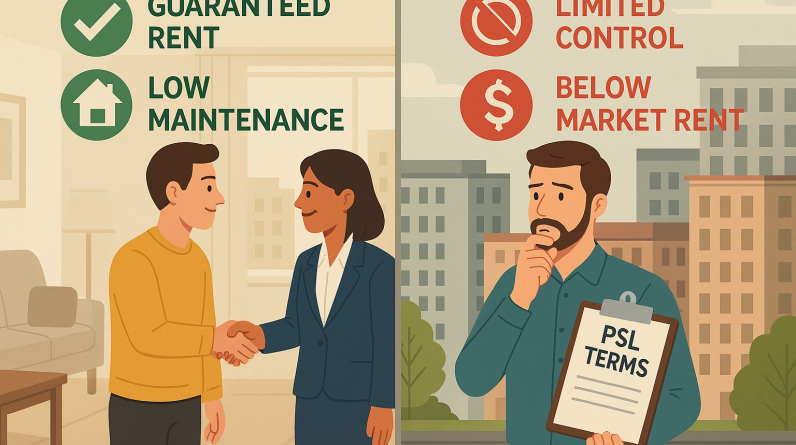
If you’re a landlord looking for a steady rental income with less hassle—or a tenant seeking secure accommodation—Private Sector Leasing (PSL) might be on your radar. It’s a scheme where local authorities lease privately owned homes to provide housing for needy people.
While the idea sounds simple and socially impactful, there’s much to consider before diving in. In this post, we’ll break down the key pros and cons of Private Sector Leasing so you can decide if it’s the right strategy for you.
✅ What Is Private Sector Leasing (PSL)?
Private Sector Leasing is a scheme in which local authorities or housing associations lease homes from private landlords for a set period (usually 3–10 years). The council uses the property to house people—often those facing homelessness or waiting for affordable housing.
In return, landlords get a guaranteed rental income and don’t have to deal directly with tenants. Sounds like a win-win? It can be—but it’s not without drawbacks.
✅ Pros of PSL for Landlords
1. Guaranteed Rental Income
One of the biggest draws for landlords is the guaranteed rent. No matter what happens with the tenant—whether they pay late, leave unexpectedly, or don’t pay—you’ll still receive rent from the local authority. That’s financial stability you can count on.
💬 “Even during void periods, I still got paid. That peace of mind is hard to price.” — A London-based PSL landlord.
2. Minimal Day-to-Day Management
With PSL, you often hand over management responsibilities to the council or their agents. That means no chasing rent, no late-night calls about plumbing issues, and no stress about finding new tenants.
Perfect for landlords who want to be hands-off.
3. Long-Term Security
Standard tenancies typically last 6 to 12 months. PSL leases often stretch between 3 and 5 years, offering more stability and predictable cash flow—especially helpful for landlords with mortgages or long-term investment goals.
4. Social Impact
Many PSL landlords are motivated not just by income but by making a positive impact. You’re helping to house vulnerable individuals and families who might otherwise struggle in the open rental market.
It’s a property with a purpose.
5. Reduced Voids and Agent Fees
PSL properties are in high demand, so void periods are rare. Plus, since leasing directly to the council, you often avoid letting agent fees like tenant finds or management costs.
Cons of PSL to Be Aware Of
1. Below Market Rent
Let’s get this out of the way—you probably won’t earn as much rent with PSL as you would on the open market. Councils typically offer a fixed rate lower than private tenants would pay.
For many landlords, the trade-off is worth it for the guaranteed income. But if you’re looking for maximum returns, PSL might not be ideal.
2. Less Control Over Tenants
Once you sign the lease, the local authority places tenants, not you. That means you don’t get to vet who lives on your property.
While most tenants are vetted and supported, some landlords may be uncomfortable giving up that control.
3. Maintenance Responsibilities
Depending on the agreement, you might still be responsible for major repairs like boilers, roofs, or structural issues. If you haven’t budgeted for these costs, they could eat into your returns.
4. Property Access is Limited
Do you want to inspect your property regularly or make changes mid-lease? Access may be restricted. Since the property is leased to the council, you must follow their guidelines.
Some landlords feel a bit “locked out” during the lease term.
5. Wear and Tear
There’s always a risk of more wear and tear when tenants are referred through housing need programs. While local authorities may manage issues, you’ll likely need to invest in repairs or refurbishments at the end of the lease.
6. Complex Contracts and Exit Restrictions
PSL leases can be legally complex. Breaking them early isn’t always easy and could result in penalties. Be sure to read the terms carefully and seek legal advice if necessary.
Is PSL Right for You?
Let’s break it down:
PSL May Be Ideal If You…
• Prefer hands-off property management
• Want guaranteed income over maximum rent
• Are you interested in long-term tenancies
• Own properties in high-demand areas
• Want to support social housing efforts
•
PSL Might Not Suit You If You…
• Want to charge top-dollar rent
• Need complete control over tenant selection
• Prefer short-term flexibility or holiday lets
• Are concerned about potential property damage
Pro Tips for Landlords Considering PSL
• Make a financial comparison: Compare PSL rent with market rent and see if the security trade-off is worth it.
• Inspect lease terms: Know who handles what—especially regarding repairs.
• Keep a reserve fund: Plan for property updates after the lease ends.
• Build a relationship with your local authority: Good communication goes a long way in making the experience smooth.
• Start with one property: Test the waters before committing your entire portfolio.
Final Thoughts
Private Sector Leasing can be an excellent way to enjoy stress-free, stable rental income—especially if you want long-term peace of mind and the chance to contribute to social good. That said, it’s not for everyone.
You may prefer traditional renting if you’re after maximum rental profit or want complete control. But if you value security over speculation, PSL could be the smart, strategic option for your next property move.